
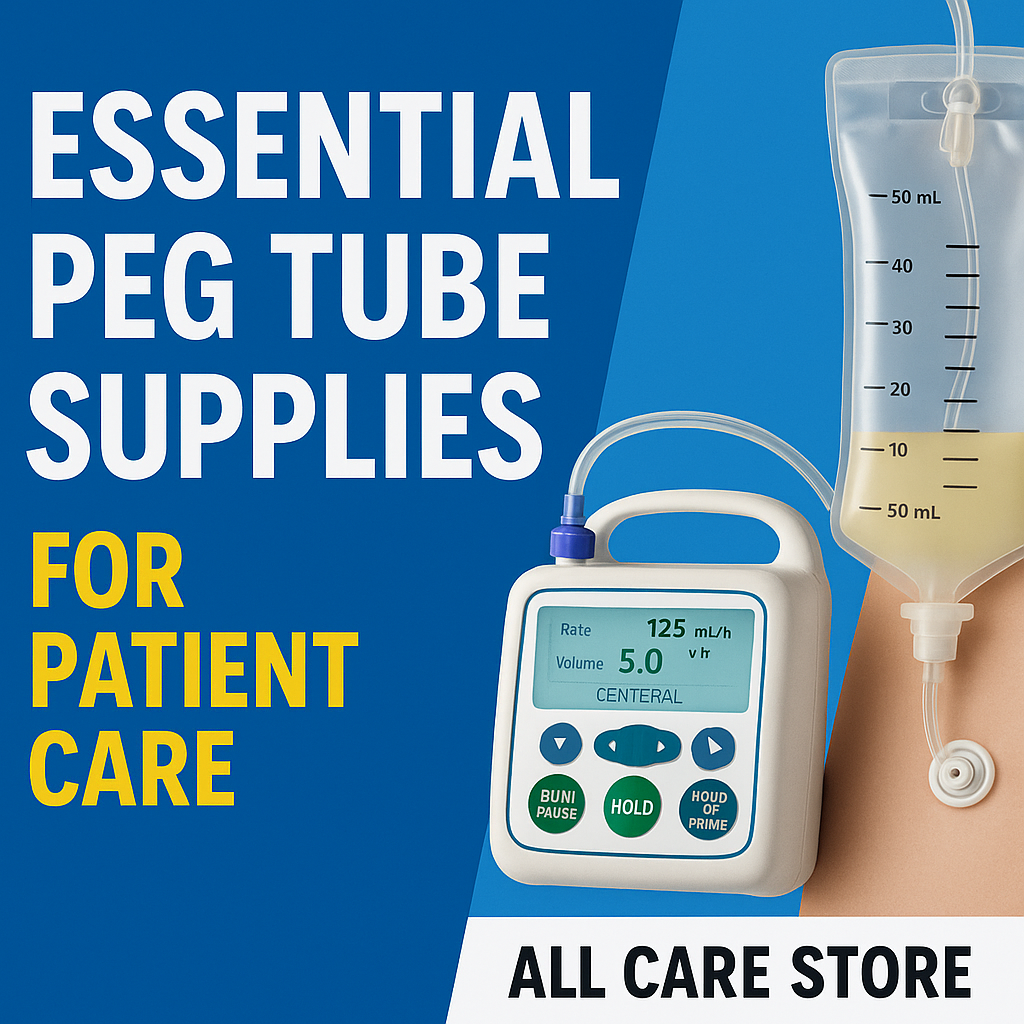
Patients who cannot sustain adequate oral intake due to neurological disorders, cancers, trauma, congenital conditions, or severe gastrointestinal dysfunction often rely on enteral feeding for long-term nutritional support. One of the safest, clinician-preferred solutions for extended enteral nutrition management is the Percutaneous Endoscopic Gastrostomy (PEG) tube. PEG feeding enables the direct delivery of liquid nutrition, hydration, and medications into the stomach via a surgically created stoma, improving patient comfort, nutritional consistency, and caregiver efficiency.
However, placing a PEG tube is only the first step. Successful long-term feeding depends heavily on the availability, compatibility, sterility, and quality of PEG Tube Supplies. These include everything from feeding administration accessories to securement devices and infection-prevention materials. When supply chains break or inferior accessories are used, feeding precision, hygiene standards, and patient well-being may be compromised.
At All Care Store, a trusted U.S.-based medical supply provider, we specialize in delivering premium, sterile, certified, and clinically compatible PEG Tube Supplies nationwide, ensuring uninterrupted enteral care support for clinicians and home caregivers across the United States.
What Are PEG Tubes and Why Do Patients Need Them?
A PEG tube is placed endoscopically by qualified clinicians, typically under sedation, allowing nutritional solutions to bypass the oral route and esophagus. PEG feeding is recommended when:
- Patients need long-term enteral feeding (>4–6 weeks).
- Oral intake is unsafe due to aspiration risk or swallowing dysfunction (dysphagia).
- Gastrointestinal anatomy allows stomach access, making G-tube feeding viable.
- Caloric needs are high and must be delivered precisely and consistently.
- Hydration, nutrition, and medication must follow clinical dosing protocols.
The PEG tube enhances quality of life relative to temporary NG or NJ tube feeding by eliminating nasal discomfort, improving stoma-based feeding hygiene, and enabling discreet long-term nutritional schedules. But PEG tube users require routine changes, extensions, flow regulators, and sterile feeding components—this is where PEG Tube Supplies become the backbone of safe nutritional delivery.
All Care Store ensures caregivers and clinicians receive access to essential, compliant PEG Tube Supplies to maintain ongoing feeding routines without clinical risk.
Core PEG Tube Supplies That Every Care Plan Must Include
A complete enteral feeding ecosystem requires multiple accessory categories. Here is a breakdown of the most critical PEG Tube Supplies:
1. Enteral Feeding Syringes
Enteral syringes are used for nutrition delivery, medication dosing, and tube flushing. These syringes are marked for enteral use to avoid misconnection with IV or parenteral syringes, reducing clinical risk. Available volumes typically range from 10 mL to 60+ mL, depending on flushing and medication protocols.
2. Feeding Bags (Gravity and Pump Compatible)
Feeding bags are essential PEG accessories that regulate liquid nutritional flow. They come in:
- Gravity feed bags for manual administration
- Pump-compatible bags designed for adaptive enteral feeding pumps, offering controlled ml/hr delivery schedules
Some feeding bags include anti-free flow mechanisms, measurement scales, and secure connectors for leak-resistant feeding.
3. PEG Extension Feeding Sets
Extension sets reduce stoma disturbance by allowing easy connection with feeding bags and syringes. They include features such as rotatory locks, anti-leak ports, Y-connectors, and flow valves.
4. Clamps, Adapters, and Connector Accessories
Clamps and connectors ensure secure attachment, prevent leakage, control nutritional flow, and restrict back-flow contamination. Adapters help caregivers attach compatible bags, drain accessories, and PEG manifolds.
5. Stoma Dressings and Infection-Control Supplies
Dressings for the stoma site maintain hygiene, dry the surrounding skin, prevent irritation, limit microbial exposure, and secure the tube. These include:
- Sterile gauze
- Medical tapes
- Hydrophilic dressings
- Stoma protective skin barriers and fixation patches
6. Daily PEG Care Kits
Care kits bundle together sterile, disposable, and hygiene-aligned PEG products for convenience. Clinicians and caregivers managing long-term PEG feeding must depend on compliant, authentic PEG Tube Supplies, all available at All Care Store.
The Role of PEG Tube Supplies in Enteral Nutrition Success
Accurate enteral feeding is not only about liquid formulas—it is about sanitized administration, measured flow control, tubing patency, connector sterility, and caregiver-friendly supply systems. PEG Tube Supplies directly influence:
- Infection prevention (especially at the stoma site and connectors)
- Feeding accuracy (ml, flow per hour for nutritional schedules)
- Tube safety (avoiding leaks, misconnection, reflux, and blockage)
- Patient comfort (soft medical-grade materials and secure fixation)
- Caregiver confidence (when supplies are labeled and protocol-aligned)
- Compliance standards (FDA-aligned sterility and materials)
Without sterile or compatible PEG Tube Supplies, clinical feeding routines may face increased risk of contamination, inconsistent dosing, reflux aspiration, or stoma infections. All Care Store offers only validated PEG Tube Supplies to reduce these risks.
Must-Follow Best Practices When Using PEG Tube Supplies
All Care Store recommends following clinically aligned PEG protocols while managing PEG Tube Supplies:
Hygiene Standards
- Always wash your hands before handling the PEG stoma or connectors
- Use sterile gloves
- Keep connectors capped when not in use
- Replace feeding bags and extension sets as per clinical routine
Tube Flushing Protocol
- Flush the tube before and after nutrition delivery
- Flush after medication administration
- Use sterile or clinician-approved flushing liquids
- Do not use carbonated or pulp drinks for routine flushing
Feeding Position
- Maintain the patient upright to avoid reflux
- Avoid air ingestion (remove bubbles from bag)
- Control the gravity feed manually if the pump systems are not prescribed
- Monitor patient discomfort and pause feeding if needed
Dressing Care
- Change dressings daily or when wet
- Keep stoma site inspected and dry
- Use skin-safe medical tapes for fixation
- Report abnormal stoma discharge to the clinician
All Care Store ensures caregivers have reliable access to certified PEG Tube Supplies to support each protocol confidently.
The All Care Store Advantage in PEG Tube Supplies
All Care Store is a single-source medical supply provider dedicated to maintaining clinical integrity, sterility compliance, and uninterrupted enteral feeding workflows in the United States. Our key differentiators include:
- Certified medical-grade material sourcing
- Sterile, leak-protected, and infection-control aligned PEG Tube Supplies
- Compatibility with both gravity and enteral pump systems
- Nationwide coverage across all 50 U.S. states
- 100% authentic medical brands
- Pediatric and adult feeding support accessories
- Fast fulfillment and reliable USA-wide delivery
Caregivers and clinicians trust All Care Store to eliminate supply disruption while maintaining safe nutritional scheduling through high-quality PEG Tube Supplies.
Who Uses PEG Tube Supplies
PEG feeding accessories are required by multiple medical and caregiver segments, including:
- Hospital nutrition departments
- ICU and chronic care teams
- Gastroenterology units
- Oncology feeding support divisions
- Long-term nursing care programs
- Home caregivers of pediatric and adult tube-feeding patients
- Patients managing independent long-term enteral feeding routines
All Care Store ensures uninterrupted access to PEG Tube Supplies for both clinical and caregiver segments.
Common PEG Tube Risks and How Quality Supplies Prevent Them
1. Infection at Stoma Site
Risk increases when dressings are reused or sub-standard. Sterile gauze, fixation patches, and infection-control aligned PEG Tube Supplies minimize microbial exposure.
2. Tube Blockage
Nutrition residue build-up and thick medication solutions are common causes. Regular flushing with protocol-correct PEG Tube Supplies, such as sterile enteral syringes, prevents blockages.
3. Leakage or Accidental Disconnection
Weak clamps and loose connections lead to inconsistent feeding. Clinically tested connectors and clamps in PEG Tube Supplies prevent feeding leaks.
4. Reflux and Aspiration
Manual gravity feeding without flow control may cause reflux. Pump-compatible extension sets and feeding bags in PEG Tube Supplies maintain regulated flow for safety.
5. IV Misconnection Risk
Using non-enteral syringes can be clinically unsafe. Properly labeled PEG Tube Supplies prevent this risk.
All Care Store supplies only sterile PEG Tube Supplies that reduce clinical feeding risks effectively.
Conclusion
PEG feeding success requires clinically compliant, sterile, accurate, and compatible PEG Tube Supplies. For hospitals and caregivers managing long-term enteral nutrition in the USA, All Care Store remains a single, trusted U.S. supplier ensuring sterile delivery, medical integrity, feeding precision, and uninterrupted nationwide availability of PEG Tube Supplies.