
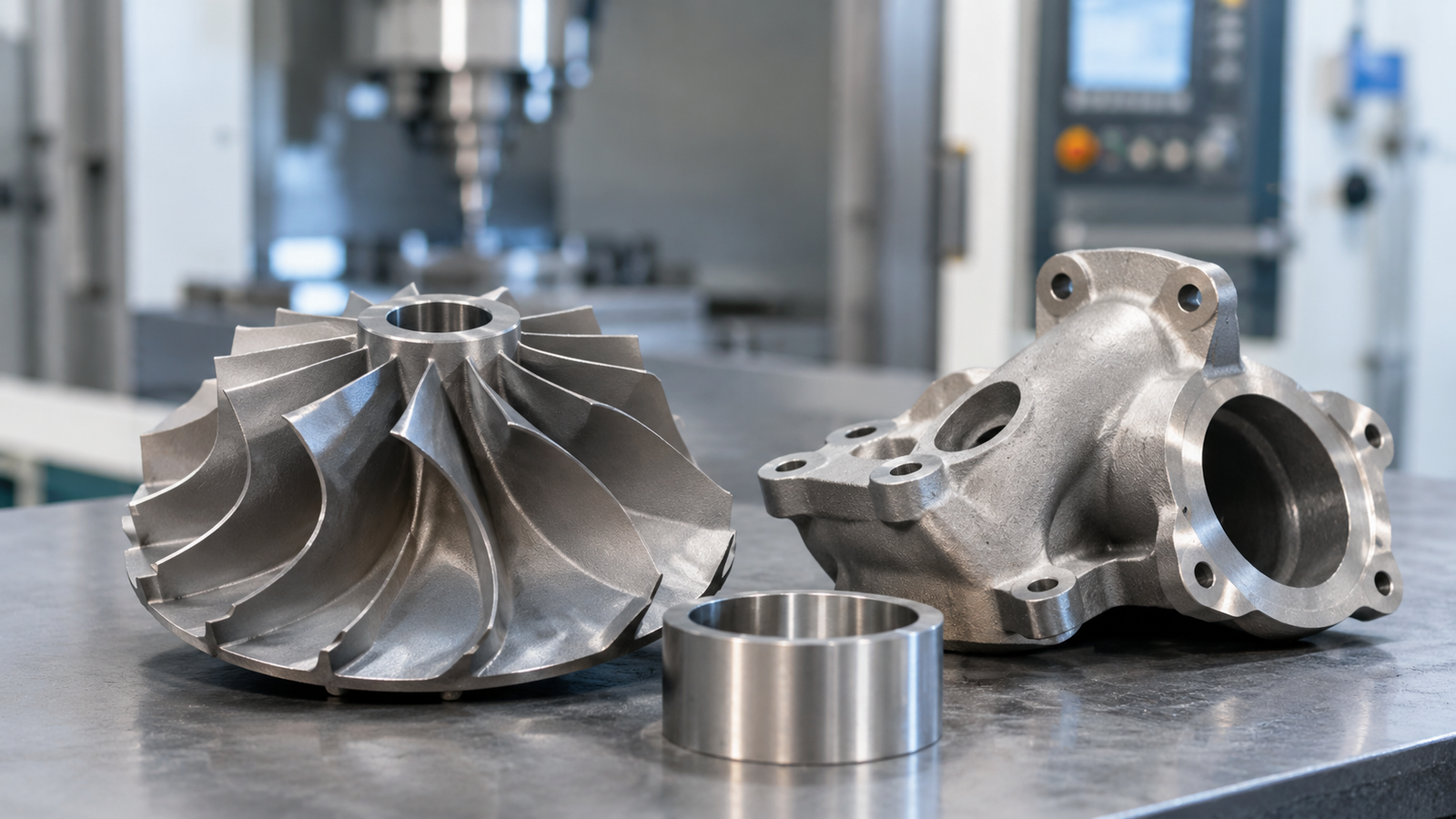
Titanium castings are gaining importance across industries that require materials capable of combining strength, corrosion resistance, and relatively low weight. Their properties make them relevant to demanding applications in aerospace, defence, medical equipment, chemical processing, marine engineering, and power generation. As manufacturers develop increasingly complex components, precision casting processes are becoming important for producing specialised parts that meet strict dimensional and material-performance requirements.
A recent analysis by Markntel Advisor estimates that the global titanium castings market was valued at USD 4.25 billion in 2026 and is projected to reach USD 4.58 billion in 2027, before expanding to USD 7.19 billion by 2033. The market is expected to register a CAGR of 7.81% during 2027–2033. The titanium castings market outlook reflects demand from aerospace and aviation, defence, medical, and industrial applications, alongside developments in precision casting and specialised material production.
Aerospace and Aviation Remain Important Demand Centres
Aerospace and aviation represent a major application area for titanium castings because aircraft manufacturers require components that can withstand demanding operating conditions without adding unnecessary weight. Titanium alloys offer a combination of strength, corrosion resistance, and heat tolerance that makes them suitable for selected aircraft structures, engine-related components, housings, brackets, and other specialised parts.
Investment casting is particularly relevant where manufacturers need intricate geometries and dimensional accuracy. It can support the production of complex components while limiting the need for extensive machining in suitable applications. However, aerospace components must undergo rigorous inspection, testing, and qualification before being accepted into aircraft programmes.
Aircraft production activity also influences demand for qualified titanium components. Airbus reported delivering 793 commercial aircraft in 2025 and ending the year with a backlog of 8,754 aircraft. Such production commitments underline the importance of reliable supply chains for specialised aerospace materials and components.
Defence and Medical Applications Broaden the Market
Defence manufacturers use titanium-based components in applications where strength, weight, and resistance to demanding environmental conditions are important. Aircraft structures, naval equipment, and specialised defence systems can require components manufactured to strict specifications. Procurement requirements and qualification procedures influence the ability of casting suppliers to participate in these programmes.
Medical applications represent another specialised area. Titanium’s biocompatibility and mechanical properties make it relevant to selected orthopaedic, dental, and surgical applications. Casting processes can support the production of components with complex shapes, although medical-grade products must meet applicable material, manufacturing, and regulatory requirements.
The U.S. National Institute of Standards and Technology provides information on materials measurement and manufacturing standards through its materials and manufacturing research programmes. Such standards-related work is relevant to industries where material consistency and component quality are essential.
Investment Casting Leads the Production Landscape
Investment casting holds an important position in the titanium castings industry because it can produce intricate components with detailed geometries. The process is relevant to aerospace and other high-performance applications where dimensional accuracy and material integrity are important considerations.
According to the market assessment, investment casting accounted for an estimated 68% share in 2026, making it the leading casting process. Centrifugal casting, meanwhile, represented an estimated 19% share and was identified as the fastest-growing casting process. These differences reflect the varied production requirements across end-use industries and component categories.
Manufacturers are also adopting simulation tools, improved mould design, process monitoring, and advanced inspection methods. These technologies can help identify potential casting defects, improve process consistency, and reduce material wastage. Non-destructive testing and metallurgical evaluation remain important for components intended for critical applications.
North America Leads While Asia-Pacific Gains Momentum
North America was identified as the leading regional market, accounting for an estimated 45% share in 2026. The region benefits from its established aerospace and defence manufacturing base, specialised foundries, and demand for precision-engineered components.
Asia-Pacific is expected to be the fastest-growing region, supported by expanding aerospace manufacturing capabilities, industrial development, and investments in advanced materials. The growth of domestic manufacturing ecosystems can create opportunities for foundries able to meet stringent customer qualification and quality requirements.
India’s advanced-materials manufacturing investments are also relevant to the wider supply landscape. The development of specialised titanium and superalloy production capacity highlights the importance of expanding domestic capabilities for aerospace and defence applications.
Raw Material Supply and Manufacturing Costs Remain Challenges
Titanium casting manufacturers face challenges related to feedstock availability, alloy preparation, energy consumption, specialised equipment, and skilled labour. Titanium requires controlled processing conditions, while the production of high-quality castings involves substantial technical expertise and investment.
The U.S. Geological Survey’s titanium statistics and information provides information on titanium production, trade, and supply-chain conditions. These factors are relevant to manufacturers assessing material sourcing, procurement risks, and long-term production planning.
Qualification requirements can also create barriers for new suppliers. Aerospace-grade materials and components may undergo lengthy evaluation processes, while customers expect traceability and consistent quality across production batches. Manufacturers must therefore balance production efficiency with rigorous testing and documentation.
Future Opportunities Depend on Precision and Supply Resilience
The global titanium castings market is projected to reach USD 7.19 billion by 2033, with growth supported by aerospace production, defence requirements, medical applications, and industrial demand. Investment casting is expected to remain important because of its suitability for complex components, while advances in manufacturing technology may improve production consistency.
The industry’s future competitiveness will depend on access to qualified raw materials, specialised foundry capabilities, process innovation, and the ability to meet demanding customer specifications. Suppliers that combine metallurgical expertise with reliable quality systems will remain relevant across high-performance manufacturing industries.