What Should You Look for in Outdoor Fitness Flooring?
Before choosing a material, think about how people will use the space. A surface suitable for walking or light yoga may not be the right choice for high-impact workouts.
Here are the important features to consider:
-
Slip resistance: The surface should provide a good grip, even when people sweat or when it rains.
-
Shock absorption: Running, jumping and other high-impact movements put pressure on joints.
-
Weather resistance: Outdoor flooring must withstand sunlight, rain, humidity and temperature changes.
-
Durability: The surface should handle regular foot traffic and exercise equipment.
-
Easy maintenance: Choose a surface that is simple to clean and maintain.
Which Flooring Materials Work Best for Outdoor Fitness Areas?
There isn’t one perfect material for every outdoor gym. Let’s compare some practical choices.
| Flooring Type | Best For | Main Advantage | Consideration |
|---|---|---|---|
| Rubber Flooring | Functional training and weight zones | Shock absorption and grip | Needs proper drainage |
| Artificial Grass | Light workouts and stretching | Soft, natural appearance | Can retain heat |
| Interlocking Gym Tiles | Home and community gyms | Easy installation and replacement | Quality varies |
| Concrete with Protective Coating | Walking and low-impact zones | Strong and durable | Hard on joints |
| Outdoor Wooden Flooring | Yoga and relaxation spaces | Natural and attractive finish | Requires weather protection |
| EPDM Rubber | Running tracks and fitness zones | Flexible and weather-resistant | Installation quality matters |
Rubber Flooring: A Practical Choice for High-Impact Workouts
If your outdoor fitness area includes jumping exercises, strength training or functional workouts, rubber flooring is worth considering.
Where does it work best?
-
Outdoor gym equipment zones
-
Cross-training areas
-
Functional workout spaces
-
Community fitness parks
Expert Tip: Don’t choose rubber flooring based on thickness alone. Check its density, drainage performance, UV resistance and intended application.
Artificial Grass: For a More Natural Workout Environment
Would you prefer exercising in a space that feels more like a garden than a traditional gym?
Artificial grass can be a good option for stretching, warm-ups, yoga and light fitness activities. It gives outdoor workout areas a softer, greener appearance without the regular mowing and watering required by natural grass.
Outdoor Wooden Flooring: Does It Work for Fitness Areas?
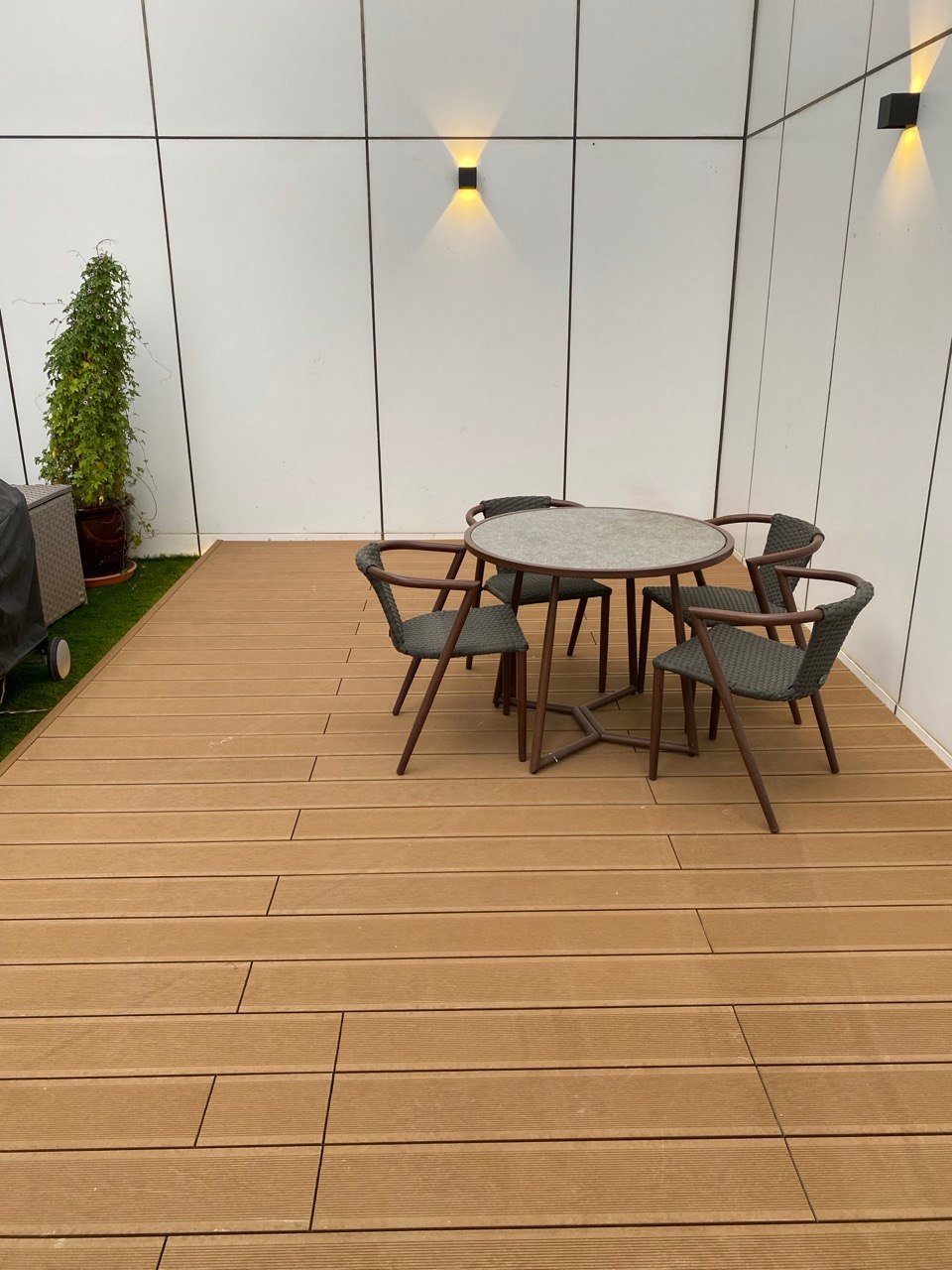
Wooden flooring can bring a completely different feel to an outdoor workout space. It creates a warm, natural setting that works particularly well for yoga decks, meditation corners and low-impact exercise areas.
However, remember that wood needs proper treatment and maintenance.
For projects that combine fitness and landscape design, experienced Landscaping Companies in Sharjah can help coordinate the flooring, surrounding greenery and outdoor layout.
Should You Use One Flooring Material Across the Entire Area?
Honestly, you don’t have to!
One of the better approaches for outdoor fitness projects is to divide the space into activity zones.
| Fitness Zone | Suggested Flooring |
|---|---|
| Strength training | Heavy-duty rubber tiles |
| Cardio exercises | Firm, slip-resistant rubber |
| Yoga and meditation | Artificial grass or treated timber |
| Stretching area | Cushioned rubber surface |
| Walking pathways | Textured concrete or suitable pavers |
| Equipment drop zones | Impact-absorbing rubber |
What Are the Latest Outdoor Fitness Flooring Design Trends?
-
Multi-functional fitness zones: Separate areas for strength training, yoga and cardio.
-
Natural-looking materials: Wood-inspired finishes, greenery and earthy colours.
-
Permeable flooring systems: Drainage-friendly surfaces for better water management.
-
Recycled rubber materials: Practical options for cushioning and outdoor use.
-
Colour-coded workout areas: Different flooring colours to identify activity zones.
Important Tips Before Installing Outdoor Fitness Flooring
-
Check the condition of the existing ground.
-
Make sure rainwater has a clear drainage route.
-
Choose UV-resistant materials.
-
Check slip resistance under wet conditions.
-
Select suitable cushioning for the equipment.
-
Avoid uneven joints and sudden changes in floor height.
-
Ask for product samples before approving the final colour and texture.
Frequently Asked Questions
Q1. What is the best flooring for an outdoor gym?
Rubber flooring, particularly suitable outdoor EPDM or rubber tile systems, is a practical choice for many outdoor gyms.
Q2. Is artificial grass suitable for outdoor workout areas?
Yes. Artificial grass works well for stretching, yoga and light exercises.
Q3. Can wooden flooring be used in outdoor fitness areas?
Yes. Treated timber or suitable outdoor decking can be used in yoga, meditation and low-impact exercise zones.
Q4. How do I prevent water accumulation on outdoor gym flooring?
Use proper ground preparation, suitable gradients and an effective drainage system.
Q5. How often should outdoor fitness flooring be maintained?
Regular cleaning, checking joints, inspecting damaged areas and removing debris should be part of the maintenance routine.
Q6. Is rubber flooring better than concrete for outdoor gyms?
For high-impact workouts, rubber generally offers better cushioning than concrete.
Final Thoughts: Choose Flooring That Makes People Want to Exercise
A good outdoor fitness area isn’t just about installing equipment and creating an attractive layout. It should make people feel comfortable, confident and motivated to come back.
The best flooring is the one that supports the activities taking place there, handles the local climate and remains easy to maintain.
For landscape projects, Progren Flooring highlights the importance of selecting outdoor surfaces that balance functionality, durability and appearance. Whether you’re planning a community fitness park or a private garden gym, think about how people will actually use the space every day.
Remember: The right flooring doesn’t just complete an outdoor fitness area. It helps make the entire space more enjoyable to use.