
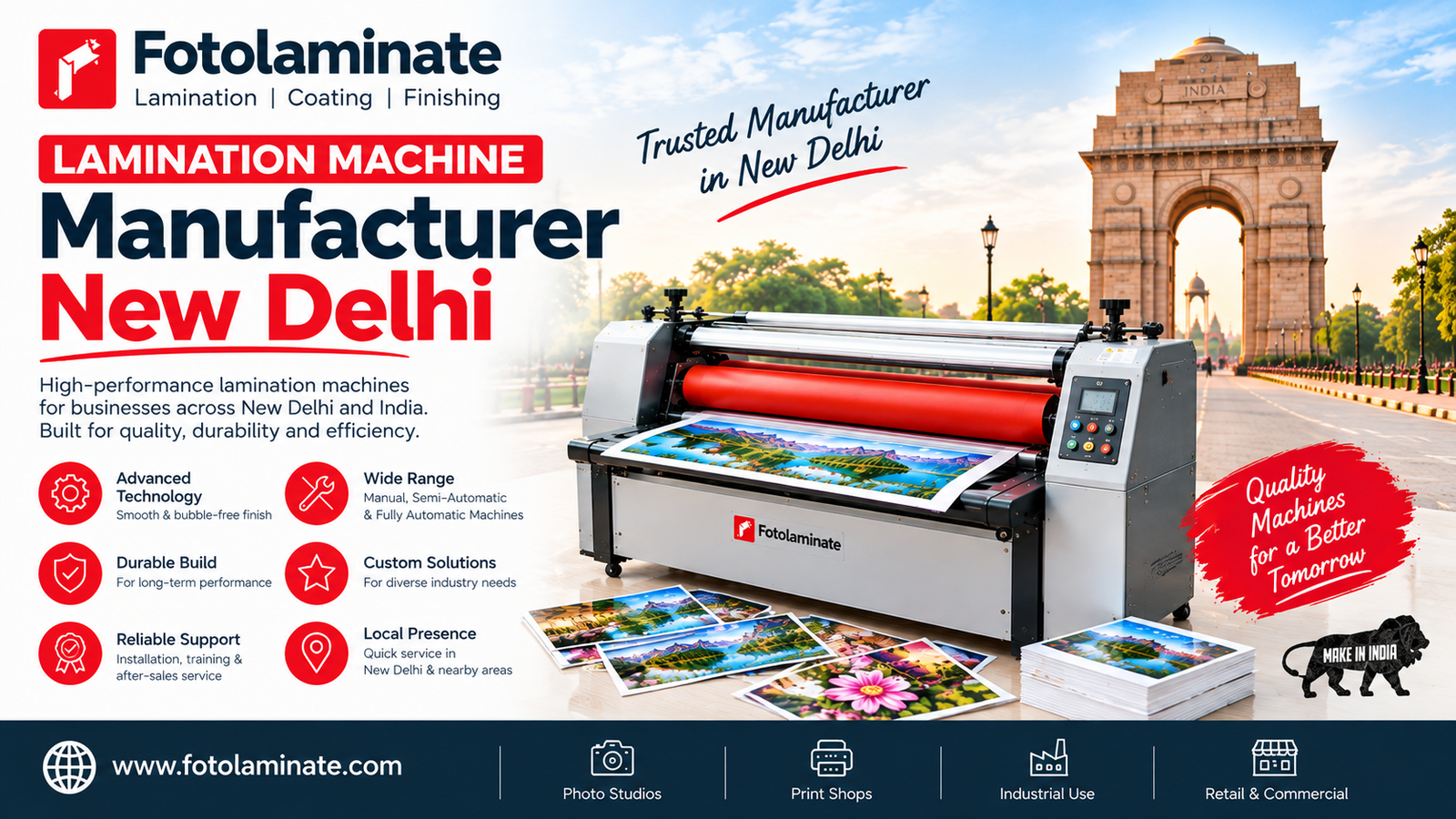
Photo studios and printing businesses handle a wide range of materials, from photographs and album prints to posters and promotional graphics. While printing quality matters, the finishing process also affects the appearance and durability of the final product. Lamination offers a practical way to add a protective layer to compatible prints and give them a more polished look.
Choosing the right machine depends on the materials being processed, the required working width, and the volume of work handled each day. Understanding these factors helps businesses invest in equipment that fits their actual needs.
Why Businesses Use Cold Lamination
A cold laminating machine applies adhesive film to a surface using pressure rather than heat to activate the bonding process. This method can be suitable for compatible photographs, graphics, and other printed materials where cold-lamination film is preferred.
The quality of the finish depends on several factors, including the film, print surface, alignment, and machine settings. Proper handling is important because trapped dust, uneven feeding, or inconsistent pressure can lead to wrinkles and bubbles.
For a smoother workflow, operators should:
- Check that the film is suitable for the material being laminated.
- Keep the print surface clean before processing.
- Align the film carefully to avoid uneven application.
- Follow the recommended operating and pressure settings.
- Test unfamiliar materials before handling a large batch.
These simple practices can help reduce waste and maintain more consistent finishing quality.
Finding a Photo Lamination Machine Manufacturer India Businesses Can Consider
Businesses searching for a photo lamination machine manufacturer India should compare more than the advertised price. The manufacturer’s product range, technical knowledge, machine specifications, and service support can all influence the purchasing decision.
Different businesses require different machine capabilities. A small photo studio may prioritise ease of use and a compact design, while a commercial printing unit may need a wider machine for larger graphics and frequent production.
Before shortlisting a manufacturer, consider these questions:
- Does the machine’s working width match your regular print sizes?
- Which films and materials can it handle?
- Are pressure adjustments and operating controls suitable for your work?
- What maintenance is required during routine use?
- Are spare parts and technical assistance available?
- Can the supplier provide a demonstration or detailed operating guidance?
Clear answers make it easier to compare models and select equipment that suits your workflow.
Selecting the Right Cold Laminating Machine
Not every cold laminator is designed for the same type of work. Some models are intended for manual operation and smaller jobs, while others offer powered rollers, adjustable speed, or pneumatic pressure control.
When comparing machines, consider how their features will affect your daily operations.
Working width: Choose a machine that accommodates your common print dimensions without unnecessary oversizing.
Roller arrangement: Check the roller construction and adjustment mechanism, as these influence material handling and the application process.
Operating controls: Forward and reverse functions, speed adjustment, and pressure controls may be useful depending on the machine.
Production capacity: Match the equipment to your expected workload rather than relying on general claims about productivity.
Workspace: Make sure there is enough room for the machine, the materials being processed, and safe operator movement.
A machine that fits these requirements can make regular finishing tasks easier to organise.
Understanding the Cost Before Purchasing
The cost of a cold laminator can vary according to its size, construction, operating mechanism, and available features. A manual model and a larger commercial machine may differ considerably in both capability and price.
Instead of choosing the lowest quotation immediately, compare the full specifications of each option. Ask whether delivery, installation, warranty coverage, and technical support are included. It is also useful to understand the cost and availability of compatible films and replacement parts.
A practical comparison should include:
- Initial purchase cost
- Supported materials and working width
- Operating and maintenance requirements
- Warranty and service arrangements
- Availability of spare parts
This approach helps businesses assess overall value instead of focusing only on the upfront expense.
Maintaining Consistent Lamination Results
Even a well-built machine requires proper operation and routine care. Dust on the rollers, incorrect film alignment, and unsuitable pressure settings can affect the finished surface.
Operators should follow the manufacturer’s cleaning instructions, store films as recommended, and inspect the machine regularly. Keeping a record of settings that work well for frequently used materials can also help maintain consistency across repeat jobs.
If defects appear, check the print surface, film compatibility, alignment, and machine settings before continuing with the rest of the batch.
Making the Right Equipment Investment
A suitable cold laminator should support your business’s current production requirements while leaving room for practical future needs. Photo studios, album makers, and printing companies can benefit from comparing machines according to their materials, working width, operating features, and maintenance requirements.
Codalam offers laminating equipment for professional applications. Businesses can explore available models, review technical specifications, and request quotations based on their intended use.
Before purchasing, discuss your regular print sizes, preferred films, and expected workload with the supplier. A careful comparison of specifications, service support, and total operating costs can help you choose equipment that supports dependable photo finishing.