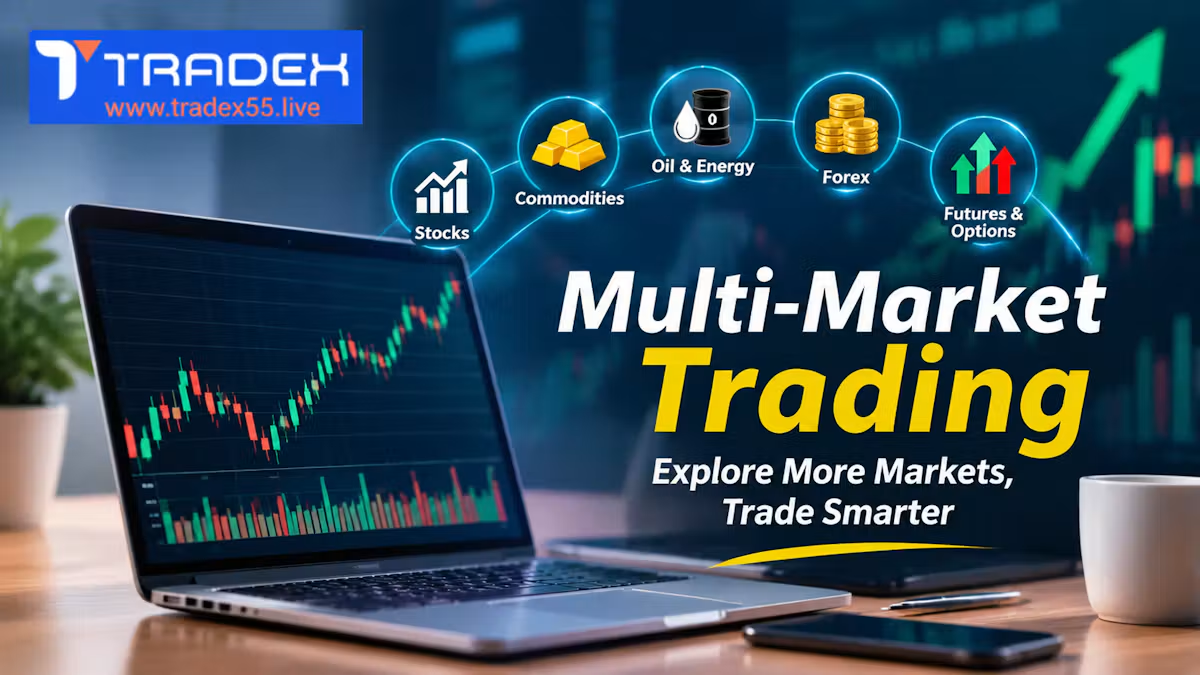
Financial markets have evolved significantly with the growth of digital technology. Traders today have access to different investment instruments, real-time market information and online platforms that make market participation more convenient. Instead of focusing on a single financial segment, many market participants are exploring opportunities across equities, commodities, derivatives and international markets. This growing interest in multi-market trading reflects a shift towards more flexible and informed trading approaches.
Understanding Multi-Market Trading
Multi-market trading refers to participating in different financial markets based on individual strategies, market conditions and financial objectives. These markets may include company shares, futures and options, precious metals, energy commodities and international stocks.
Each market operates differently and responds to various economic factors. For example, stock prices may react to company earnings and business developments, while commodity prices can be influenced by global demand, supply conditions and geopolitical events. Understanding these differences allows traders to evaluate opportunities across multiple segments rather than depending entirely on one market.
However, accessing several markets also requires proper research and an understanding of the risks associated with each financial instrument.
Why Are Traders Exploring Multiple Financial Markets?
One major reason behind the growing popularity of multi-market trading is the availability of different financial opportunities. Market conditions are not always favourable for every asset class at the same time. While equity markets may experience uncertainty, commodities could respond to changing global demand or supply trends.
Exploring different segments helps traders develop a broader understanding of financial markets. It also allows them to compare price movements, identify market trends and evaluate different trading strategies.
Another important factor is accessibility. Modern digital platforms allow traders to monitor multiple instruments through connected interfaces. For those researching a multi-market trading platform, having access to different market segments in one place can make market monitoring and account management more convenient.
The Role of Technology in Modern Trading
Technology has changed how individuals access financial markets. Earlier, market participants often depended on traditional communication methods to receive updates and execute transactions. Today, online trading platforms provide digital access to market information, price charts, account details and order management tools.
Some important features traders consider when evaluating an online trading platform include:
- Market Accessibility: The ability to explore different financial instruments through a connected trading environment.
- Real-Time Information: Access to current market prices and relevant updates for informed decision-making.
- Account Management: Convenient access to balances, open positions and transaction details.
- Mobile Compatibility: The flexibility to monitor markets using smartphones, tablets or desktop devices.
- Customer Assistance: Support for account-related questions and platform navigation.
These features can improve the overall trading experience, although technology cannot eliminate market uncertainty or guarantee profitable outcomes.
Importance of Risk Management Across Different Markets
Participating in multiple markets does not automatically reduce financial risk. Every instrument has its own characteristics, price behaviour and potential losses. Futures and options, for example, can involve considerable complexity, while leveraged trading can increase both potential profits and losses.
Traders should establish clear risk management practices before entering any position. Setting stop-loss levels, controlling position sizes and avoiding excessive exposure are important steps towards maintaining discipline.
It is also useful to maintain a trading journal. Recording entry prices, exit points, reasons for taking positions and final outcomes helps identify repeated mistakes and evaluate the effectiveness of different strategies.
Another important practice is understanding the costs associated with trading. Brokerage, transaction charges, taxes and other applicable fees can influence the final trading outcome.
Building a More Informed Trading Approach
Successful market participation requires more than access to different financial instruments. Traders need patience, research skills and a clear understanding of their financial objectives. Following economic developments, studying historical price movements and reviewing market-related information can help improve decision-making.
Beginners should avoid entering several markets simultaneously without understanding how they operate. Learning one segment at a time can provide a stronger foundation before exploring more complex instruments.
It is equally important to avoid making decisions based on short-term market excitement or unverified information. A structured trading plan helps individuals remain focused on their objectives instead of reacting impulsively to every price movement.
Conclusion
Multi-market trading has become an important part of the modern financial landscape. Digital platforms have made it easier to explore different financial instruments, monitor market developments and manage trading activities. However, greater accessibility also brings the responsibility of understanding market behaviour and managing financial exposure.
By combining continuous learning, careful research and disciplined risk management, traders can develop a more structured approach to participating in today’s changing financial markets.