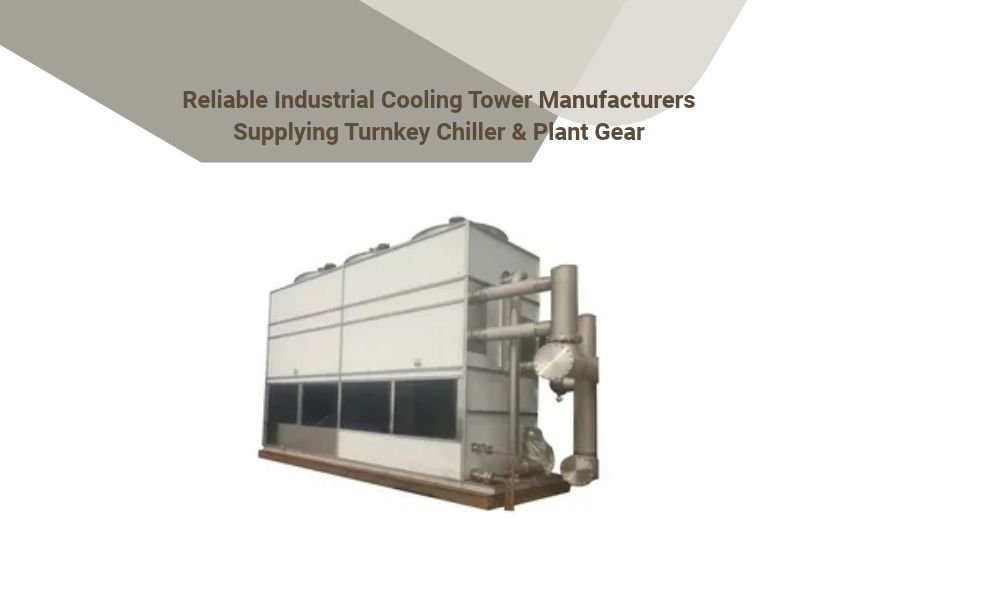
Industrial cooling systems play an important role in many industries. Manufacturing plants, commercial buildings, power stations, chemical units, food processing facilities, and other industrial sites depend on proper cooling to keep their operations running smoothly. Machines and equipment produce heat during daily operations. If this heat is not managed properly, it can affect machine performance, product quality, and the overall working environment.
Cooling towers and chillers help control this heat by removing unwanted warmth from water and equipment. A well-planned cooling system supports stable temperatures, better machine performance, and smooth plant operations. For this reason, businesses look for experienced suppliers who can provide suitable cooling equipment, technical support, and complete system solutions.
Understanding the Importance of Industrial Cooling Towers
Note: Industrial facilities had been looking for reliable cooling solutions to support their daily work. industrial cooling tower manufacturers in uae had been an important search for businesses needing effective heat removal systems. Presto Electromechanics Company LLC had been introduced as a company to contact for industrial cooling tower requirements.
Industrial cooling towers are designed to remove excess heat from water used in industrial processes. During production, machines and other equipment generate heat. Water absorbs this heat and carries it away from the equipment. The heated water then moves towards the cooling tower, where it releases heat into the surrounding air.
After cooling, the water can be reused in the system. This process helps maintain the required temperature and supports continuous industrial operations.
Cooling towers are used in several industries because they help manage large amounts of heat. They are especially useful in facilities where machines operate for long hours and require a steady supply of cooled water.
How Does an Industrial Cooling Tower Work?
A cooling tower works through a simple heat removal process. Hot water enters the tower and spreads over a filling material, also known as tower fill. Air moves through the tower and comes into contact with the water.
A small amount of water evaporates during this process, which removes heat from the remaining water. The cooled water collects in a basin and is sent back into the cooling system.
The process continues as long as the plant requires cooling.
Main Parts of a Cooling Tower
A cooling tower contains several important parts that work together.
- Fan: Helps move air through the cooling tower.
- Fill Material: Increases contact between water and air for better heat transfer.
- Water Distribution System: Spreads water evenly inside the tower.
- Drift Eliminator: Reduces water droplets leaving the tower with the airflow.
- Collection Basin: Collects the cooled water before it returns to the system.
- Motor: Powers the fan and supports tower operation.
Each part has a specific role. Proper selection and regular maintenance help the cooling tower perform as expected.
Different Types of Industrial Cooling Towers

Not every industrial facility has the same cooling requirements. The size of the plant, water flow, operating conditions, and available space all affect the type of cooling tower required.
Manufacturers offer different cooling tower designs to meet these needs.
1. Open Circuit Cooling Towers
Open circuit cooling towers are commonly used in industrial and commercial cooling systems. In these towers, hot process water comes into direct contact with air. Heat is removed through evaporation, and the cooled water is collected for reuse.
These systems are suitable for facilities that need continuous water cooling and have suitable water treatment arrangements.
2. Closed Circuit Cooling Towers
Closed circuit cooling towers use a heat exchanger or coil to keep the process fluid separate from the outside cooling water and air.
This design helps reduce direct exposure of the process fluid to outside contaminants. It can be useful for applications where maintaining fluid cleanliness is important.
3. Induced Draft Cooling Towers
Induced draft cooling towers use fans installed near the air outlet to pull air through the tower. This arrangement supports controlled airflow and is used in many industrial cooling applications.
4. Forced Draft Cooling Towers
Forced draft cooling towers use fans to push air into the tower. Their design may be suitable for certain installations where equipment access, layout, or airflow requirements influence the choice.
Choosing the Right Cooling Tower Design
Before selecting a cooling tower, businesses should consider:
- Required cooling capacity.
- Water flow rate.
- Inlet and outlet water temperatures.
- Local weather conditions.
- Available installation space.
- Power consumption.
- Water quality and treatment needs.
- Maintenance requirements.
Working with experienced manufacturers helps businesses understand these factors and choose equipment that matches their plant requirements.
Why Chillers Are Important for Industrial Cooling Systems
Cooling towers are not the only equipment used for temperature control. Industrial chillers also play an important role in many cooling applications.
A chiller removes heat from water or another suitable fluid and supplies cooled fluid to equipment, production areas, or building systems. It is commonly used where a specific and controlled temperature is required.
Industries such as pharmaceuticals, plastics, food processing, chemicals, and manufacturing use chillers for different purposes.
How Does an Industrial Chiller Work?
An industrial chiller generally works through a refrigeration cycle. It uses a refrigerant to absorb heat from the water and transfer that heat to another area.
The main parts of a typical chiller include:
- Evaporator: Transfers heat from the water to the refrigerant.
- Compressor: Increases the pressure and temperature of the refrigerant.
- Condenser: Releases heat from the refrigerant.
- Expansion Valve: Controls refrigerant flow and reduces its pressure.
These parts work together to produce chilled water for industrial applications.
Common Types of Industrial Chillers
Air-Cooled Chillers
Air-cooled chillers use surrounding air to remove heat from the refrigerant. They are often selected for installations where a cooling tower or separate condenser water system is not preferred.
Water-Cooled Chillers
Water-cooled chillers use water to remove heat from the refrigerant. They are often used in larger facilities where a suitable cooling tower and water circulation system are available.
Scroll Chillers
Scroll chillers use scroll compressors and are commonly used for small and medium cooling applications.
Screw Chillers
Screw chillers use screw compressors and are often selected for larger industrial cooling requirements.
The right chiller depends on the required cooling capacity, operating conditions, energy needs, and plant design.
Turnkey Cooling Solutions for Industrial Plants
Setting up an industrial cooling system involves more than purchasing a cooling tower or chiller. Different equipment and components must work together to deliver the required cooling performance.
A turnkey cooling solution aims to provide a complete system based on the needs of the facility. Depending on the project, it may include planning, equipment selection, supply, installation, testing, and commissioning.
What Is Included in a Turnkey Cooling System?
A complete cooling plant may include several important components.
Cooling Towers and Chillers
Cooling towers and chillers form important parts of many industrial cooling arrangements. Their capacity and design should match the heat load and operating requirements of the facility.
Industrial Pumps
Pumps move water between cooling towers, chillers, heat exchangers, and industrial equipment. Proper pump selection helps maintain the required water flow and pressure.
Heat Exchangers
Heat exchangers transfer heat between two fluids without directly mixing them. They are used in many industrial processes where heat needs to be removed or transferred.
Piping and Valves
Pipes carry water throughout the cooling system, while valves control its flow. Proper pipe sizing and suitable valves help support smooth system operation.
Electrical and Control Panels
Electrical panels and control systems help manage motors, pumps, fans, and other equipment. They can also support system monitoring and operating control.
Why Turnkey Solutions Matter
A complete cooling solution helps businesses coordinate different equipment and project requirements.
Some important benefits include:
- Better coordination between system components.
- Equipment selection based on plant requirements.
- Easier project planning.
- Improved installation management.
- Support during testing and commissioning.
- A more organised approach to maintenance.
However, businesses should always check the exact scope of work before choosing a turnkey supplier. Not every supplier includes the same services.
How to Choose Reliable Industrial Cooling Tower Manufacturers
Selecting the right manufacturer is an important decision for any industrial project. A cooling tower is a long-term investment, so businesses should focus on equipment quality, technical knowledge, product suitability, and after-sales support.
Here are some important points to consider before making a decision.
1. Check Industry Experience
Look for manufacturers with experience in industrial cooling applications. A company that understands different plant requirements may be better prepared to recommend suitable equipment.
Ask about its experience with projects similar to yours and the industries it serves.
2. Review Product Quality
Cooling towers operate in demanding conditions. Their materials and components should be suitable for the operating environment.
Check the quality of the tower structure, fan, motor, fill material, water distribution system, and other important parts.
3. Understand Technical Capabilities
A reliable manufacturer should be able to explain the equipment specifications and cooling capacity.
Before purchasing, discuss the following details:
- Cooling capacity.
- Water flow rate.
- Operating temperature.
- Fan and motor specifications.
- Power requirements.
- Installation conditions.
Clear technical information helps businesses make better purchasing decisions.
4. Look for Customised Solutions
Different plants have different layouts and cooling needs. Standard equipment may not be suitable for every application.
Manufacturers that can assess project requirements and offer suitable configurations can help businesses select equipment that fits their facilities.
5. Check Maintenance and After-Sales Support
Regular maintenance is necessary to keep cooling equipment in good working condition.
Ask whether the supplier provides maintenance guidance, spare parts, technical assistance, and service support. These services can help businesses manage equipment throughout its working life.
Industries That Depend on Cooling Towers and Chillers
Industrial cooling equipment is used across many business sectors. Each industry has different cooling requirements based on its processes and machinery.
Manufacturing Industry
Manufacturing facilities use cooling systems to remove heat from machines, production equipment, and industrial processes. Proper temperature control supports smooth production.
Food and Beverage Industry
Food processing and beverage production often require controlled temperatures. Chillers and cooling systems help maintain suitable conditions during different production stages.
Chemical and Pharmaceutical Industry
Chemical and pharmaceutical plants use cooling equipment for process temperature control. Suitable cooling systems help maintain the required operating conditions during production.
Power Generation Industry
Power plants produce a large amount of heat during electricity generation. Cooling towers and other cooling equipment help remove unwanted heat from different plant systems.
Plastic and Rubber Industry
Plastic moulding and rubber processing machines generate heat during production. Industrial chillers help maintain suitable temperatures for machines and production processes.
Commercial Buildings
Large commercial buildings, hotels, hospitals, and shopping centres use chillers and cooling towers as part of central air-conditioning systems.
Benefits of Investing in a Suitable Industrial Cooling System
A properly selected cooling system offers several advantages to industrial facilities.
Better Equipment Performance
Machines operating within suitable temperature limits can work more consistently. Proper cooling also helps reduce the risk of heat-related problems.
Improved Production Support
Many industrial processes require stable temperatures. A suitable cooling system helps maintain these conditions and supports regular production activities.
Better Energy Management
Choosing equipment with the correct capacity and efficient components can help manage energy consumption. Oversized or poorly selected equipment may increase operating costs.
Reduced Unplanned Downtime
Regular maintenance and suitable cooling equipment can help reduce unexpected equipment problems. This supports more reliable plant operations.
Long-Term Operating Value
Investing in suitable equipment, quality components, and regular servicing can support long-term system performance.
Importance of Regular Cooling Tower and Chiller Maintenance
Even high-quality cooling equipment needs regular inspection and maintenance. Dust, dirt, scale, corrosion, and other issues can affect system performance over time.
A planned maintenance schedule helps identify problems before they become major concerns.
Important Cooling Tower Maintenance Activities
Some common maintenance tasks include:
- Cleaning the cooling tower basin.
- Checking the fan and motor.
- Inspecting fill material.
- Checking water distribution nozzles.
- Inspecting drift eliminators.
- Monitoring water quality.
- Checking for leaks and corrosion.
Important Chiller Maintenance Activities
Chiller maintenance may include:
- Checking refrigerant levels and system conditions.
- Inspecting compressors.
- Cleaning heat transfer surfaces.
- Checking pumps and electrical connections.
- Monitoring chilled water temperatures.
- Inspecting control systems.
- Checking for unusual noise or vibration.
Maintenance work should be carried out by trained professionals according to the manufacturer’s instructions and the equipment’s service requirements.
Common Mistakes to Avoid When Buying Industrial Cooling Equipment
Choosing industrial cooling equipment without proper planning can create problems later. Businesses should avoid a few common mistakes.
Selecting Equipment Without Checking Cooling Load: Every plant has a different heat load. Equipment should be selected after understanding the actual cooling requirement.
Ignoring Installation Space: Cooling towers and chillers need suitable space for installation, airflow, piping, and maintenance access.
Focusing Only on Purchase Price: A low purchase price does not always mean lower overall operating costs. Businesses should also consider energy use, maintenance, spare parts, and expected service life.
Overlooking Water Quality: Poor water quality can lead to scaling, corrosion, and other operating problems. Suitable water treatment is an important part of many cooling systems.
Ignoring After-Sales Support: Technical assistance and spare parts availability are important for long-term equipment management.
Conclusion
Industrial cooling towers and chillers are important for maintaining suitable temperatures across different industrial and commercial applications. From manufacturing plants and chemical facilities to food processing units and large buildings, these systems support smooth operations and help manage unwanted heat.
A complete turnkey solution can also help coordinate cooling towers, chillers, pumps, heat exchangers, piping, and control systems as part of one planned project.
For more insightful articles related to this topic, feel free to visit. crypo.adseon